
Remembering What Education Forgot
Learning for Life
THE CHALLENGE
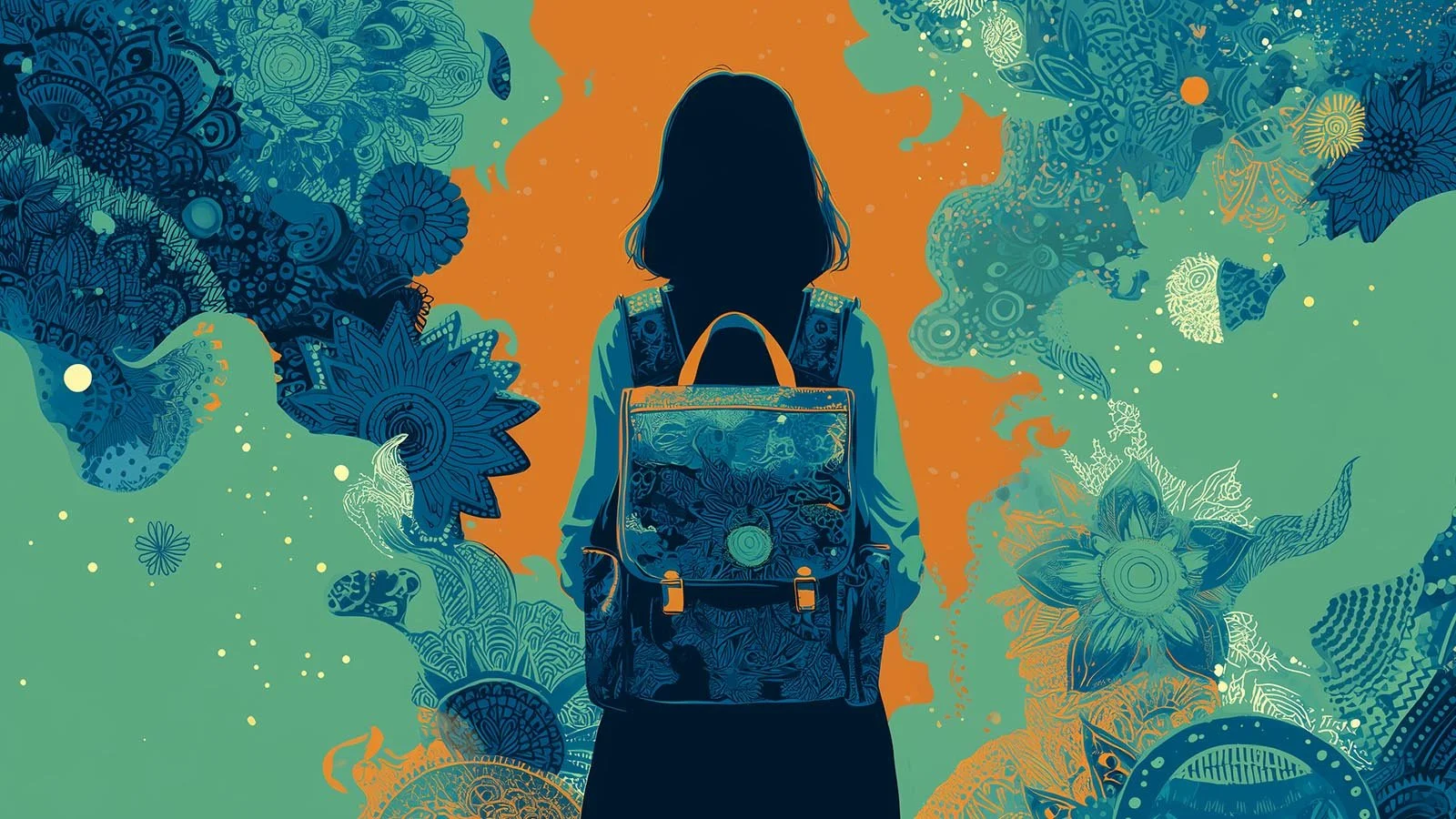
As young people move through education, their backpacks fill with facts and formulas. But growing up today also means navigating mental ill-health, social division and environmental uncertainty. Learning for Life exists to help them make sense of it all.
These resources were created by educators across more than a decade to reconnect learning with life. They’re shared freely so they can be lived out in real classrooms and real lives.


THE ESSENTIALS
Young people need more than knowledge to thrive, they need foundations for life. To know themselves. To belong with others. To feel their place in the living world. These are not extras, they are essentials. Research across psychology, neuroscience and ancient wisdom all points to the same truth: without them, no education is whole.
THE JOURNEY
Imagine a classroom where learning feels alive. Where a lesson does not begin with facts to remember but with a question that opens space. Who am I becoming? Where do I belong? How am I part of nature? Here, knowledge is not delivered. Wisdom is discovered.
THE PEDAGOGY
Here, students think with their heads, feel with their hearts and act with their hands. They reflect, they question, they try things out together. A lesson feels less like a lecture and more like a campfire conversation. A place to pause, share stories and find meaning. This is learning that prepares you for life.
Voices from the classroom
It seems to me that you have encompassed what education is truly about… learning to live, to be, to think and to respond in a way that teaches us to be fully human…
The lessons have left such a positive feeling in our class, recognising that by working together we can help care for ourselves, each other and the planet.
I just love teaching ThoughtBox lessons. Thank you for making it so easy and so very interesting and engaging for us all!
The children are really loving the ThoughtBox content and are responding to it brilliantly. Thank you so much.
I am absolutely loving the ThoughtBox primary resources. They provoke brilliant conversation and philosophical thinking.
The ThoughtBox lesson plans are high quality, easy to use and highly informative. Their innovation and relevance have enhanced our curriculum exponentially.
Much of what matters in life goes unspoken.
Learning for Life resources are used by educators worldwide to have conversations that truly matter with young people.
Questions you might be wondering
Quick answers to help you get started with ease and confidence.
Learning for Life is for educators who want learning to feel connected to real life. It supports young people of all ages to explore who they are, how they relate to others and how they see their place in the world. Inquiry-led topics create space for reflection and dialogue around questions many young people already carry. Students feel seen. Conversations slow down and the room settles.
These resources feel less like delivering content and more like exploring big questions together. You will start with a video, story or prompt, then follow discussion questions that encourage active listening and widen perspectives. Creative and reflective activities help students connect ideas to their own lives and the wider world. There is no push for a neat answer. The value is in the curiosity and the conversation. Many educators notice more thoughtful dialogue and calmer, more respectful debate.
There are three connected journeys: Personal, Social and Earth. Each journey includes six topics that help students explore who they are, how they relate to each other and how they see their place in the wider living world. Every topic is guided by a big question and a series of inquiries and activities that deepen curiosity and expand ideas.
“What makes me me?”
“Where can we all find happiness?”
“How do cultural stories shape our world?”
“What makes us say wow?”
“Is social media making us less social?”
“What does it mean to be spiritual?”
“Where do we come from?”
“What does fairness actually mean?”
“Is help always helpful?”
“What does it mean to belong?”
“What are the different ways we love?”
“What does home mean?”
“Why is our climate changing?”
“Where do things go when we throw them away?”
“Who makes our clothes?”
“What on earth are we eating?”
“Why is water so precious?”
“How can we all live well together?”
Each question flexes to real school rhythms. Use it for meaningful conversations in thirty minutes or go deeper over an hour. Some educators return to the same question across several weeks. There is no need to cover everything. Choose the pace and depth that fits your students and the moment.
All resources are editable so you can adapt language, prompts and content to your students and your context. Many educators adjust to include current affairs, local culture or what is present in the group. You can follow natural curiosity, start small or go deep. The structure supports you with scaffolding and guidance whilst leaving plenty of room for your own unique teaching style.
Learning for Life has been created by teachers for teachers. Educators from a range of different contexts and cultures have contributed, keeping the questions grounded, relevant and usable across different settings. The focus is on what is happening for young people in local and global contexts.
Some use the inquiries in classroom lessons, tutor time, assemblies, discussion circles, project weeks and drop-down days. Some use them daily, some weekly. Others bring them in when a topic feels timely. Each inquiry includes an overview so you can quickly see what is inside and how it might fit.
Skills, values and mindsets strengthen through practice. When young people regularly practise caring for themselves, others and the living world, these ways of thinking, feeling and acting become part of everyday life. Curiosity naturally deepens, empathy grows and responsibility starts to feel natural. The head, heart, hands model of learning creates conditions for reflection, connection and growth.
Yes. Learning for Life is shared under a Creative Commons Attribution–NonCommercial–ShareAlike 4.0 International licence (CC BY-NC-SA 4.0).
You are welcome to use the resources, adapt them and bring them to life in real classrooms and communities. Please credit ThoughtBox, keep the work non commercial and share any adaptations under the same licence.
The ThoughtBox brand, along with the Triple WellBeing® names and visual identity, remain part of our story and are not included for reuse without permission.
“Learning for Life resources draw on more than a decade of action research in regenerative education and align with the Triple WellBeing Framework. Young people grow courage to face uncertainty, kindness to walk alongside others and awareness of everyday choices that shape their world. For schools, this means real substance behind a simple promise: education is not only about knowing, it is about becoming.”
Rachel Musson, ThoughtBox Director of Education
